
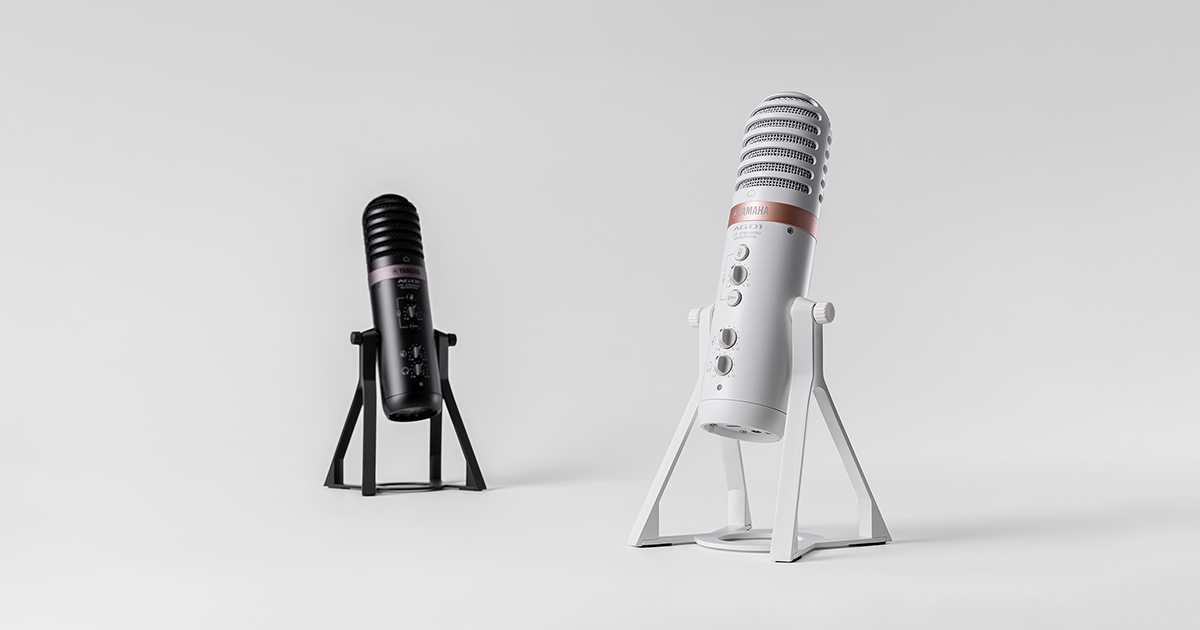
- The AG01’s distinguishing feature is the combination of a USB microphone, external audio inputs, headphone monitoring, loopback, and onboard processing. B&H identifies these capabi
- Loopback helps bring computer playback into a broadcast. B&H lists both loopback and mix-minus for the AG01 (https://www.bhphotovideo.com/c/product/1701781-REG/yamahaag01bmicrophon
- Start with the exact computer or mobile device, operating-system version, and streaming application you plan to use. Then confirm the USB connection, required adapters, power arran
Disclosure: No sponsorship, loaned or gifted products, or affiliate links
1. Buy it for the mixing job, not just voice capture
Key point: The AG01’s distinguishing feature is the combination of a USB microphone, external audio inputs, headphone monitoring, loopback, and onboard processing. B&H identifies these capabilities for the black Yamaha AG01 B (http
The AG01’s distinguishing feature is the combination of a USB microphone, external audio inputs, headphone monitoring, loopback, and onboard processing. B&H identifies these capabilities for the black Yamaha AG01 B (https://www.bhphotovideo.com/c/product/1701781-REG/yamahaag01bmicrophonewithmixerusbinterface.html).
That combination matters when your stream has several audio sources. You might need your voice, playback from a computer, and audio from a compatible phone or external player. Putting those connections around one microphone can reduce the need for a separate small mixer.
The benefit depends on your actual signal path, however. Having the connectors does not establish that every source can be combined in every operating mode—or that your streaming application will receive precisely the mix you intend.
Before buying, describe the job in one sentence: “I need to send my voice and computer playback to the stream while hearing a remote guest without returning their own voice to them.” Then confirm that exact routing.
The tradeoff is integration. You are choosing the microphone and mixing functions together rather than selecting and replacing them independently. If you only need speech capture for calls or narration, much of the AG01’s distinctive value may go unused.
Evidence:
“The AG01’s distinguishing feature is the combination of a USB microphone, external audio inputs, headphone monitoring, loopback, and onboard processing. B&H identifies these capabilities for the black Yamaha AG01 B (https://www.bhphotovideo.com/c/product/1701781-REG/yamahaag01bmicrophonewithmixerusbinterface.html).”
2. Which features actually change your stream?
Key point: Loopback helps bring computer playback into a broadcast. B&H lists both loopback and mix-minus for the AG01 (https://www.bhphotovideo.com/c/product/1701781-REG/yamahaag01bmicrophonewithmixerusbinterface.html). Those func
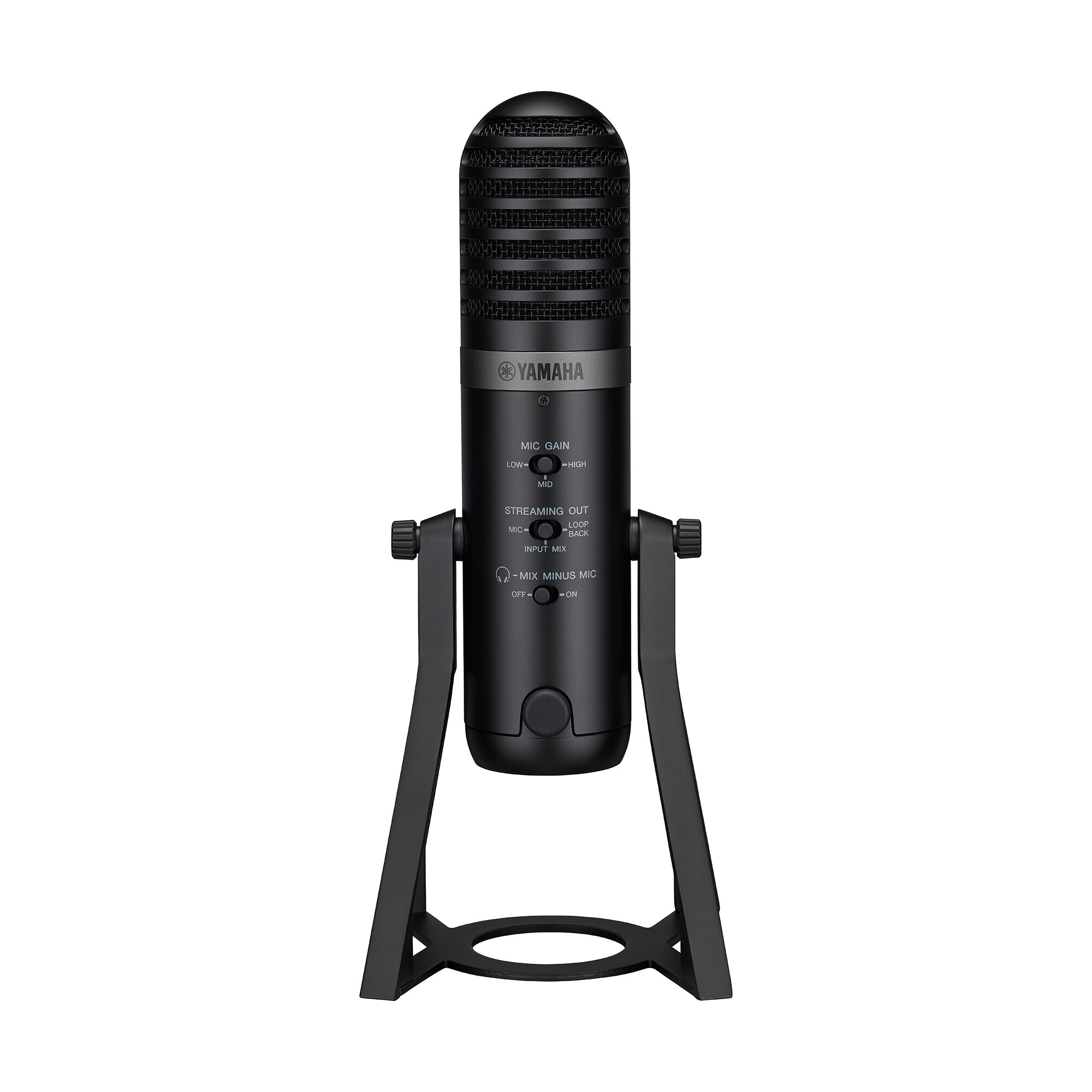
Loopback helps bring computer playback into a broadcast. B&H lists both loopback and mix-minus for the AG01 (https://www.bhphotovideo.com/c/product/1701781-REG/yamahaag01bmicrophonewithmixerusbinterface.html). Those functions are relevant when mixing speech with music, demonstrations, or remote conversations. They still require correct routing: do not assume they guarantee an echo-free call in every application.
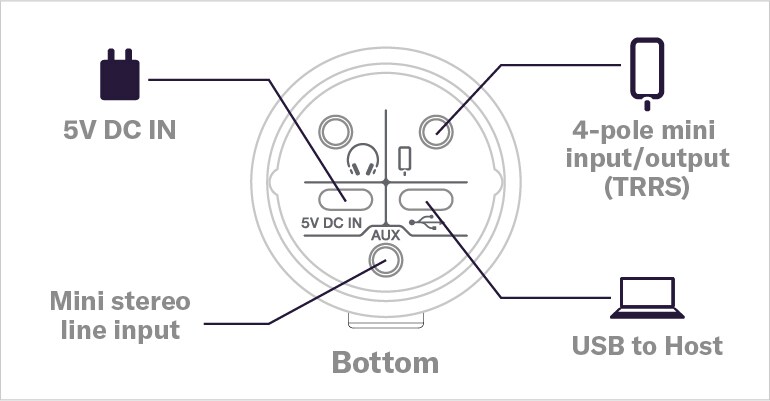
The auxiliary and phone connections can simplify external-source audio. B&H specifies a 3.5mm TRS auxiliary input and a 3.5mm TRRS phone input/output. These could avoid a separate mixer when adding a compatible player or phone, but cables, adapters, signal levels, and return-audio behavior must match. A phone’s physical connection alone does not prove compatibility.
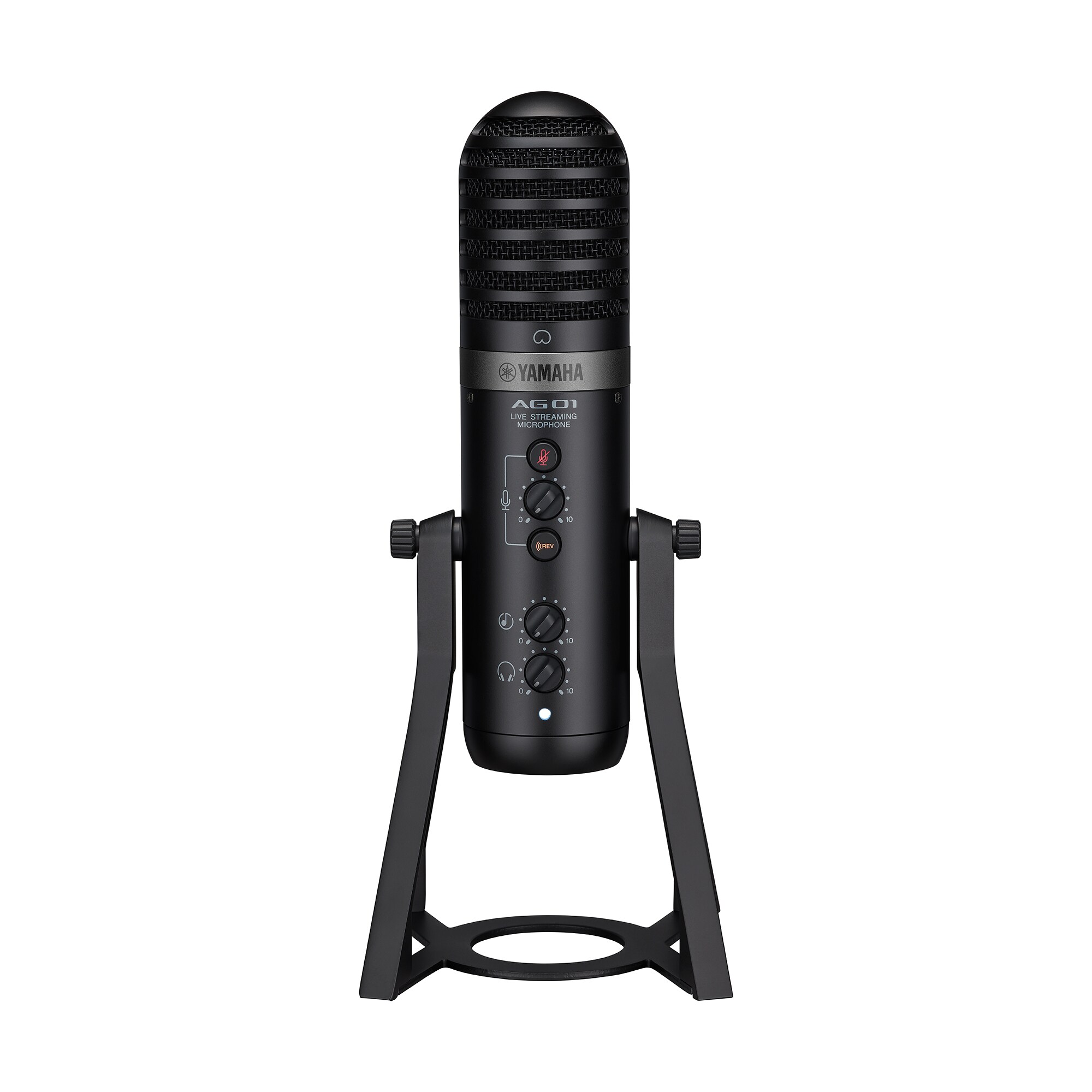
Onboard compression, EQ, and reverb can reduce dependence on software effects. According to B&H’s specifications (https://www.bhphotovideo.com/c/product/1701781-REG/yamahaag01bmicrophonewithmixerusbinterface.html), the AG01 provides all three. Compression can help manage voice-level variation, EQ can shape tonal balance, and reverb can add an effect during a live performance. Poor settings can also make speech less natural or less intelligible; bypassing effects may be preferable when recording for later editing.
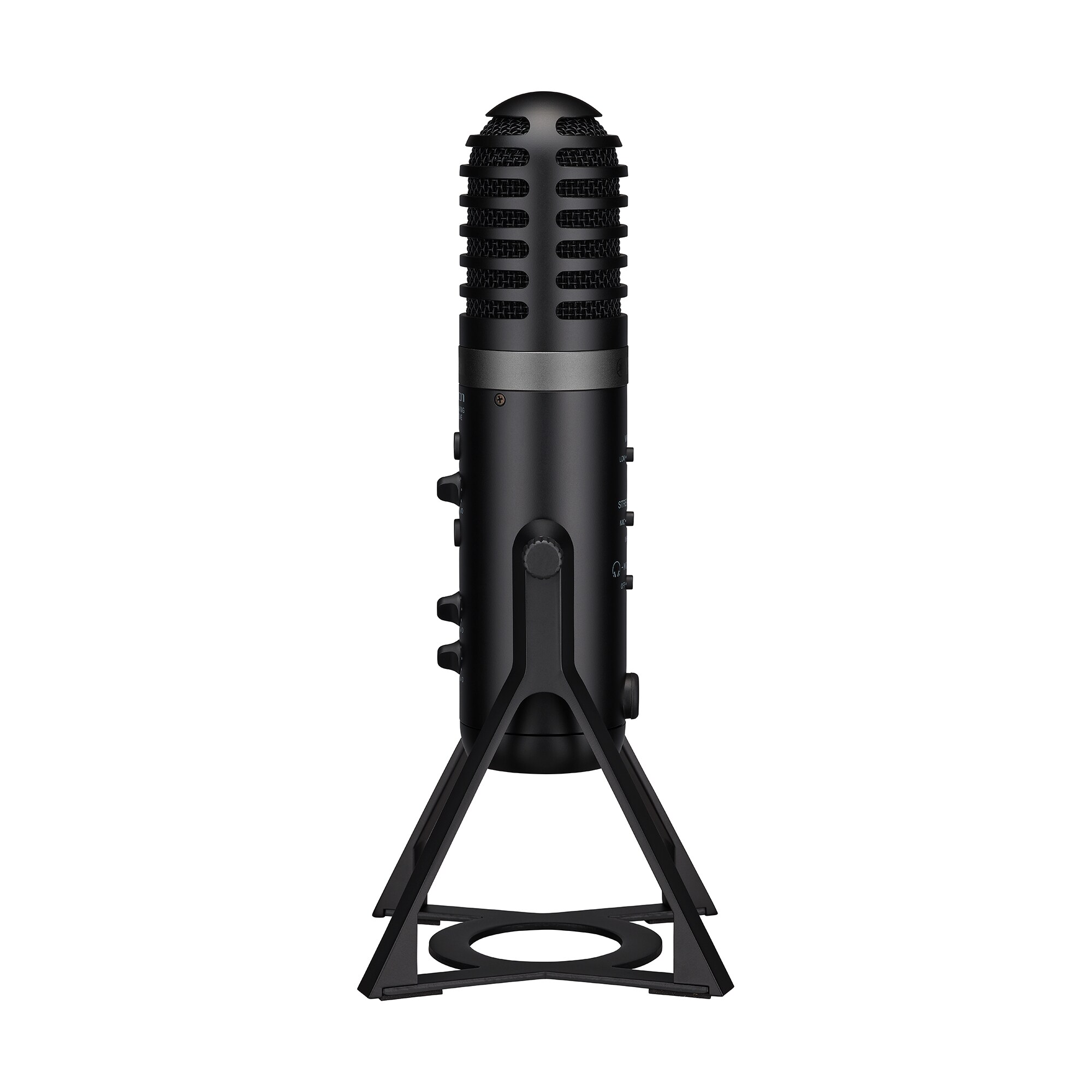
The cardioid condenser pickup makes placement important. B&H lists a side-address cardioid microphone: speak toward its pickup face and place unwanted sound toward its less-sensitive directions where practical. That is useful for a single speaker, but it is not evidence that keyboard noise, room reflections, or other people will disappear.
USB connectivity is also a limitation. The AG01 suits a USB-centered recording setup, but B&H lists no conventional analog microphone output. It is not a substitute for an XLR microphone feeding an existing interface or analog mixer.
These are source-backed capabilities, not independently measured rankings for sound quality, noise rejection, or end-to-end latency.
Evidence:
3. Check your computer, phone, and desk before ordering
Key point: Start with the exact computer or mobile device, operating-system version, and streaming application you plan to use. Then confirm the USB connection, required adapters, power arrangement, and whether you need audio trave
Start with the exact computer or mobile device, operating-system version, and streaming application you plan to use. Then confirm the USB connection, required adapters, power arrangement, and whether you need audio traveling in both directions.
B&H describes USB-powered operation and AG Controller software for adjusting processing. That makes a suitable power source and supported software part of the setup—not incidental details. External battery operation, where supported, would still depend on the power source; there is no substantiated runtime figure to use here.
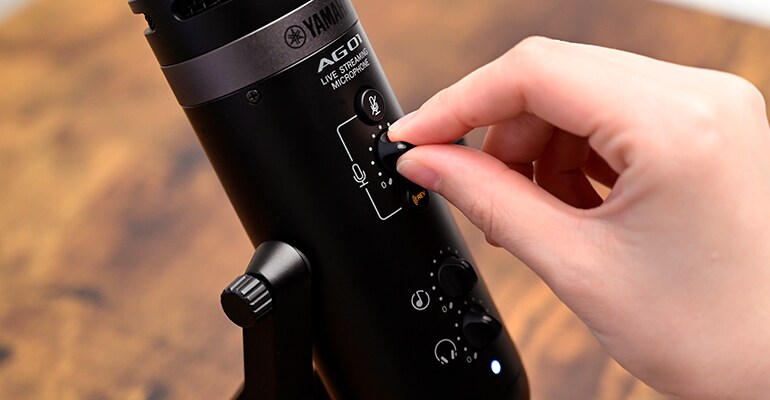
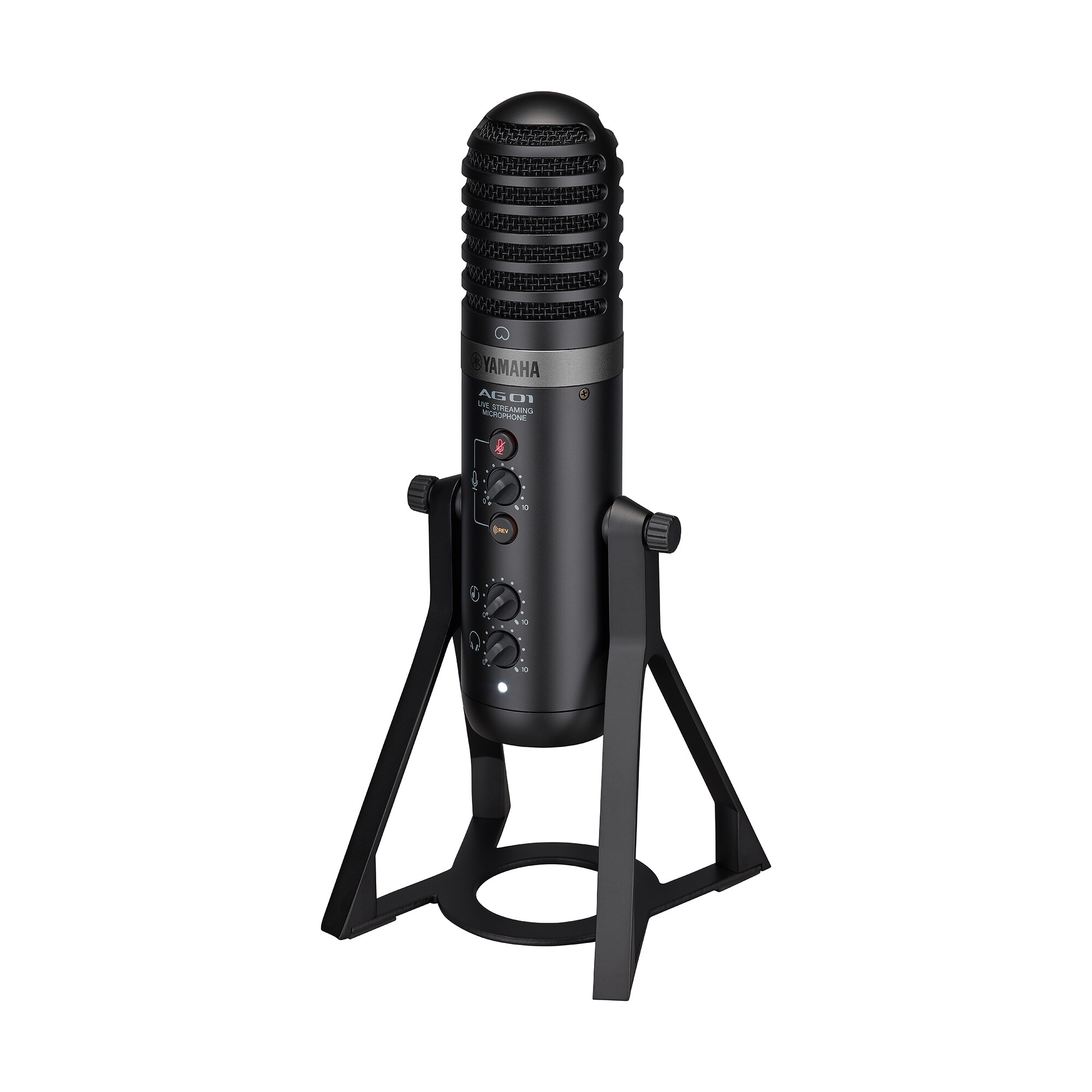
Physical controls matter during a live session. B&H lists mute, gain, headphone volume, monitoring, and effects controls. Their practical value is the ability to make routine adjustments without abandoning your presentation to navigate software. Confirm which settings remain accessible on the microphone and which require AG Controller.
For placement, B&H lists an included desktop stand, a 3/8-inch stand thread, and a weight of 2.6 pounds for the AG01 (https://www.bhphotovideo.com/c/product/1701781-REG/yamahaag01bmicrophonewithmixerusbinterface.html). The stand provides a starting point, but a comfortable speaking position may require different mounting. If using an arm, check its supported load, thread compatibility, reach, and cable clearance. Weight is relevant to mounting—not proof of durability.
Evidence:
4. AG01 versus AG03MK2 plus an XLR microphone
Key point: The meaningful alternative is a Yamaha AG03MK2 paired with a suitable XLR microphone, not the mixer alone. The US retailer zZounds’ AG Series guide (https://www.zzounds.com/lp/yamaha-ag-series-livestream-gear-zzounds-spo
The meaningful alternative is a Yamaha AG03MK2 paired with a suitable XLR microphone, not the mixer alone. The US retailer zZounds’ AG Series guide (https://www.zzounds.com/lp/yamaha-ag-series-livestream-gear-zzounds-spotlight/617), dated September 2, 2026 and fetched November 17, 2026, identifies the AG03MK2 as a route for users with an XLR microphone. It does not establish a current, matched complete-system comparison.
If you already own a compatible XLR microphone and stand, the modular route deserves particular attention. Compare only the additional purchases needed to deliver your required routing and monitoring.
If starting from nothing, include the microphone, mixer, cable, mounting, and necessary adapters. The AG01 may simplify that shopping list, but simplicity is not automatically a lower total cost.
Until those details are established, use this conditional rule:
- Favor the AG01 if its verified delivered cost is lower for the workflow you need and you do not value separate microphone upgrades. - Favor the modular route if reusing existing equipment or changing microphones independently matters enough to justify its verified total cost.
There is insufficient matched evidence to name a sound-quality winner or a numerical price crossover.
Evidence:
5. Budget for the complete setup—and verify support
Key point: For historical context, B&H displayed a US price of $209.99 for the black AG01 B, marked Special Order with expected availability of 2–4 weeks, in the snapshot dated November 17, 2026. Those are dated seller details, not
For historical context, B&H displayed a US price of $209.99 for the black AG01 B, marked Special Order with expected availability of 2–4 weeks, in the snapshot dated November 17, 2026. Those are dated seller details, not a guaranteed checkout price or delivery commitment. Source: B&H (https://www.bhphotovideo.com/c/product/1701781-REG/yamahaag01bmicrophonewithmixerusbinterface.html)
Your purchase total should include required adapters, cables, mounting, tax, and shipping—not merely the microphone’s displayed price.
For the same US configuration and source date, B&H listed a limited one-year manufacturer warranty. Confirm eligibility and service terms directly with Yamaha before relying on that protection. Source: B&H (https://www.bhphotovideo.com/c/product/1701781-REG/yamahaag01bmicrophonewithmixerusbinterface.html)
Yamaha’s name and design history do not establish this model’s current reliability. Replacement-part availability and repairability remain unverified. Integration also creates an ownership tradeoff: a fault could disrupt the combined workflow, whereas separate components can potentially be replaced individually.
Evidence:
6. Buy now, wait, or keep what you have?
Key point: Buy now only when the AG01 solves a present production problem: you can identify a needed mixing or monitoring capability, confirm the exact device-and-app routing, and accept the verified delivered cost and arrival date
Buy now only when the AG01 solves a present production problem: you can identify a needed mixing or monitoring capability, confirm the exact device-and-app routing, and accept the verified delivered cost and arrival date.
For an urgent stream or paid session, the practical threshold is stricter: the complete setup must arrive with enough time to validate the intended signal path. An unconfirmed special order is not a dependable deadline solution.
Wait if adapters, software support, return-audio behavior, or total cost remain uncertain. Wait for a price drop only after establishing that the product fits; a discount cannot fix incompatible routing. There is no verified successor information here that justifies waiting specifically for a newer model.
Keep existing equipment if it already delivers clear voice capture, monitoring, external-source mixing, and the processing you need. A higher advertised recording-format ceiling or a promotional price alone does not demonstrate a useful upgrade.
The deciding question is simple: Which missing capability will the AG01 add, and what equipment will it replace? If neither answer is clear, keep your money until the workflow—not the promotion—creates a reason to buy.
### Further reading
These fetched articles provide background on the AG01’s workflow and controls, not primary proof of current prices, compatibility, or comparative performance:
- HiFiReport: Yamaha AG01 USB Microphone with Built-in Mixer Review (https://www.hifireport.com/yamaha-ag01-usb-microphone-with-built-in-mixer-review/) - Mixdown: Review—Yamaha AG01 USB Microphone (https://mixdownmag.com.au/reviews/review-yamaha-ag01-usb-microphone/) - delamar: Yamaha AG01 review (https://www.delamar.de/test/yamaha-ag01-test/) — German-language background.
Evidence:
Sources and evidence
- www.bhphotovideo.com — Product listing; seller claims require independent verification.
- www.hifireport.com — Supporting source supplied by the writer.
- mixdownmag.com.au — Supporting source supplied by the writer.
- www.yamaha.com — Supporting source supplied by the writer.
- www.delamar.de — Supporting source supplied by the writer.
- www.zzounds.com — Supporting source supplied by the writer.